Smart Cities: 7 Smart Solutions Transforming Urban Planning
Introduction
Table of Contents
As our cities grow, the need for smart urban planning becomes more urgent. We explore how technology and data can help us design more efficient and resilient urban environments.
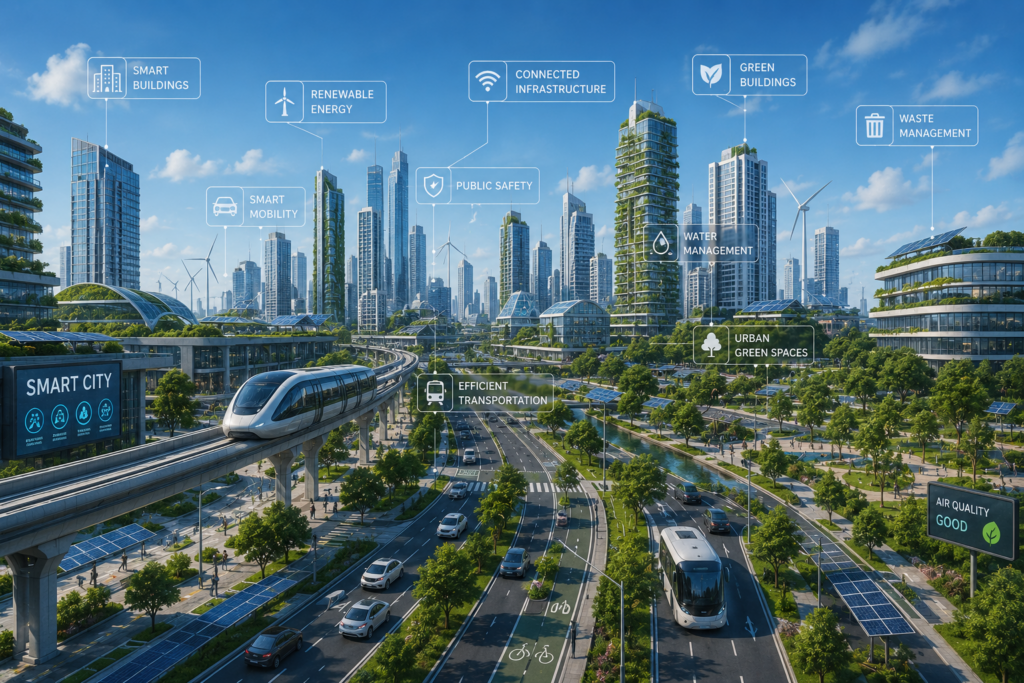
As urban populations continue to grow, cities face increasing pressure to provide efficient infrastructure, sustainable development, and a higher quality of life. The concept of the Smart City has emerged as a solution to these challenges, combining technology, data, and innovative urban planning to create more connected, efficient, and livable environments.
Smart cities are not simply about integrating technology into urban spaces. They are about using innovation to improve how people live, work, move, and interact with their surroundings.
What Is a Smart City?
A smart city leverages digital technologies, real-time data, and intelligent infrastructure to optimize city operations and improve public services. From transportation systems and energy management to waste collection and public safety, every aspect of urban life can benefit from smarter planning and technology integration.
The ultimate goal is to create cities that are sustainable, resilient, and people-centric.
Intelligent Mobility and Transportation
Traffic congestion remains one of the biggest challenges in growing cities. Smart mobility solutions use data and technology to improve transportation efficiency and reduce travel times.
Key innovations include:
- Smart traffic management systems
- Real-time public transit tracking
- Electric vehicle infrastructure
- Intelligent parking systems
- Bicycle and pedestrian-friendly networks
These solutions help reduce congestion, lower emissions, and create more accessible urban environments.
Sustainable Energy and Resource Management
Smart cities are designed to use resources more efficiently. Advanced monitoring systems allow city administrators to track energy consumption, water usage, and environmental performance in real time.
Examples include:
- Smart electrical grids
- Solar-powered infrastructure
- Rainwater harvesting systems
- Energy-efficient public lighting
- Automated water management networks
These technologies reduce waste while improving the sustainability of urban development.
Data-Driven Urban Planning
Modern cities generate vast amounts of data every day. Smart cities use this information to make informed decisions about infrastructure, public services, and future development.
Through sensors and connected systems, planners can analyze:
- Traffic patterns
- Population movement
- Energy demand
- Air quality
- Public space utilization
This data enables cities to respond proactively to challenges and optimize urban performance.
Smart Buildings and Connected Communities
Buildings are becoming increasingly intelligent. Integrated technologies allow structures to automatically manage lighting, ventilation, security, and energy consumption.
Benefits include:
- Lower operating costs
- Improved occupant comfort
- Enhanced energy efficiency
- Better building performance
When connected across entire neighborhoods, these systems contribute to a more efficient and responsive urban ecosystem.
Enhancing Quality of Life
Technology alone does not make a city smart. The true measure of success lies in how effectively a city improves the daily experiences of its residents.
Smart cities focus on:
- Safer public spaces
- Better healthcare access
- Efficient public services
- Inclusive community development
- Improved environmental quality
The objective is to create urban environments that are not only technologically advanced but also more human-centered.
The Role of Architecture in Smart Cities
Architecture plays a vital role in shaping smart urban environments. Buildings and public spaces must be designed to support connectivity, sustainability, and adaptability.
Architects are increasingly incorporating:
- Passive design strategies
- Renewable energy systems
- Smart building technologies
- Flexible mixed-use developments
- Green infrastructure
The future of urban design lies in creating spaces that seamlessly integrate technology while maintaining a strong connection to people and nature.
Challenges and Opportunities
While smart cities offer significant benefits, they also present challenges related to data privacy, infrastructure costs, and digital accessibility. Successful implementation requires collaboration between governments, architects, engineers, technology providers, and communities.
With thoughtful planning and responsible innovation, smart cities can become models for sustainable urban development.
Looking Ahead
The cities of tomorrow will be more connected, efficient, and resilient than ever before. Artificial intelligence, renewable energy, autonomous mobility, and advanced construction technologies will continue to reshape how urban environments function.
However, the most successful smart cities will not be defined by technology alone. They will be defined by their ability to create healthier, more sustainable, and more meaningful experiences for the people who call them home.
Conclusion
Smart cities represent the future of urban living. By combining technology, sustainability, and human-centered design, they offer solutions to some of the most pressing challenges facing modern society.
At ArchB Studio, we believe the future of architecture extends beyond individual buildings. It involves creating integrated environments where innovation, sustainability, and community come together to shape thriving cities for generations to come.