
Common Home Building Mistakes: 7 Costly Errors to Avoid
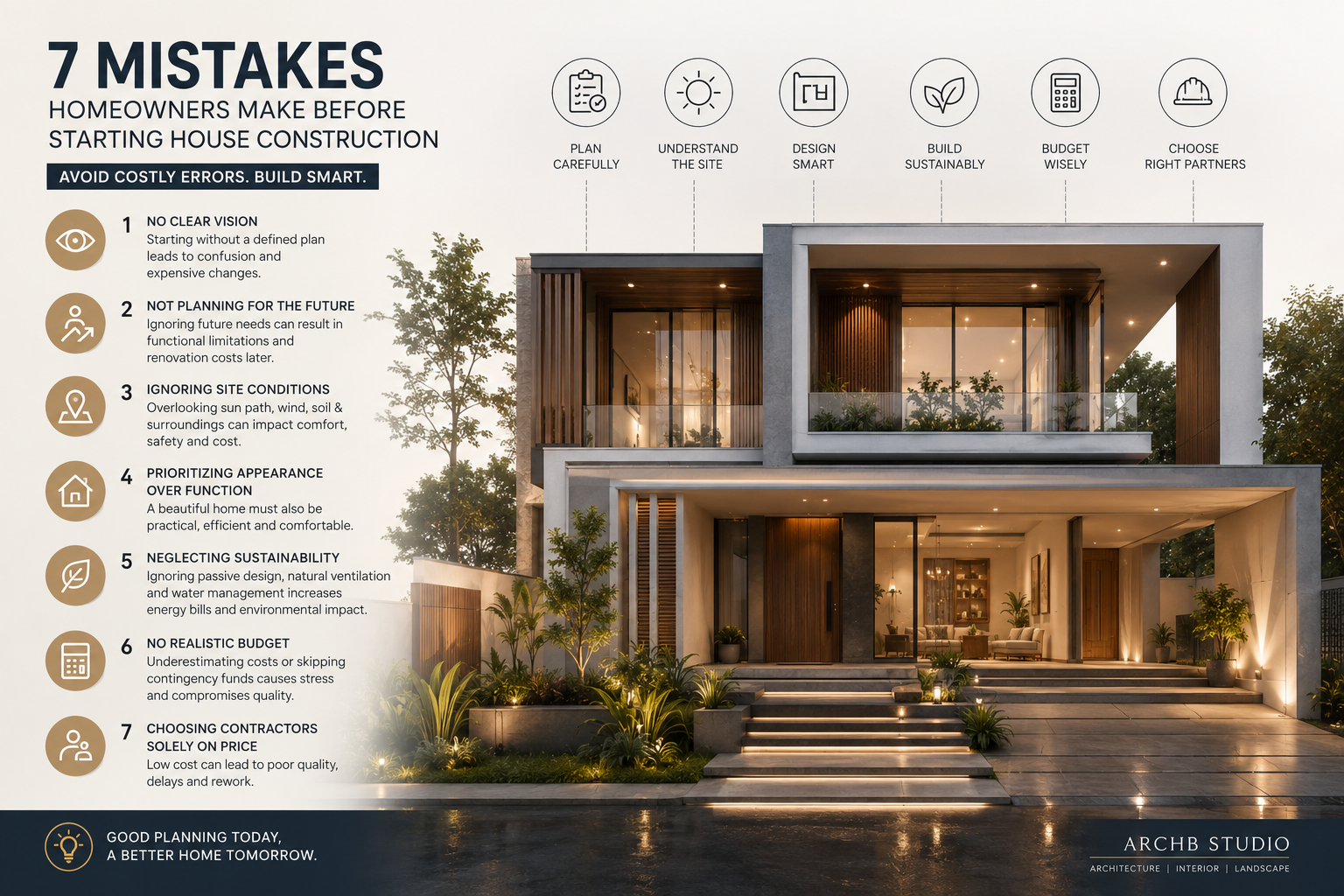
Building a home is one of the most significant investments a family makes. Yet many homeowners begin construction without adequate planning, leading to budget overruns, delays, and design compromises.
Introduction
Table of Contents
1. Starting Without a Clear Design Vision
One of the biggest and most expensive mistakes homeowners make is beginning construction without a clear vision. Many start with a few Pinterest images or a vague idea of their dream home, only to discover halfway through construction that the layout doesn’t suit their lifestyle. This often leads to endless revisions, costly design changes, project delays, and unnecessary stress.
Before a single brick is laid, develop a comprehensive design brief outlining your lifestyle, space requirements, architectural style, budget, and future expectations. A well-defined vision helps architects create a home that is functional, cohesive, and tailored to your needs.
2. Underestimating Future Needs
Designing only for today’s requirements can quickly turn your dream home into tomorrow’s renovation project. Families grow, careers change, parents may move in, children need study spaces, and remote work has become a permanent reality for many households.
Thinking ahead can save lakhs of rupees in future remodeling costs. Flexible rooms, extra storage, wider doorways, and adaptable layouts allow your home to evolve with your changing lifestyle instead of becoming outdated within a few years.
3. Ignoring Site Conditions
No two plots are the same, yet many homeowners assume the same design will work everywhere. Ignoring the site’s natural characteristics can result in excessive heat, poor ventilation, waterlogging, structural complications, and higher electricity bills for decades.
Factors such as sun orientation, prevailing wind direction, soil quality, slope, drainage, neighboring buildings, and local climate should influence every major design decision. A home that responds to its site will always outperform one that simply looks attractive on paper.
4. Prioritizing Appearance Over Function
A visually stunning home means very little if it is uncomfortable to live in every day. Oversized glass walls without shading, awkward room layouts, insufficient storage, poor circulation, and impractical spaces may look impressive in photographs but often become daily frustrations.
Exceptional architecture balances beauty with usability. Every room should serve a clear purpose, maximize natural light, provide privacy where needed, and create comfortable living spaces that perform as well as they look.
5. Neglecting Sustainability
Many homeowners consider sustainable design an optional luxury, but overlooking it often leads to significantly higher operating costs throughout the life of the house. Poor orientation, inadequate insulation, limited natural ventilation, and inefficient water management increase energy consumption year after year.
Simple design decisions such as proper building orientation, cross ventilation, roof insulation, rainwater harvesting, solar-ready infrastructure, and efficient shading can dramatically improve comfort while reducing electricity and maintenance costs for decades.
6. Not Establishing a Realistic Budget
Construction budgets frequently spiral out of control because homeowners plan only for the visible costs of building. Design fees, statutory approvals, interiors, landscaping, utility connections, furniture, taxes, and unexpected site issues are often overlooked until they become financial emergencies.
A realistic budget should account for every phase of the project and include a contingency reserve of at least 10-15% to handle unforeseen expenses without compromising quality or delaying completion.
7. Choosing Contractors Solely on Price
Selecting the cheapest contractor can become the most expensive decision of the entire project. Low quotations often hide compromises in workmanship, materials, supervision, or project management, leading to delays, defects, disputes, and expensive repairs long after construction is complete.
Instead of comparing prices alone, evaluate contractors based on experience, completed projects, client testimonials, communication, quality standards, and transparency. Paying slightly more for proven expertise is often far less costly than fixing poor construction later.
Final Thoughts
Successful homes are not created by chance. They result from thoughtful planning, informed decisions, and collaboration between homeowners, architects, and construction professionals. Investing time in the planning stage often saves substantial time and money during construction.