

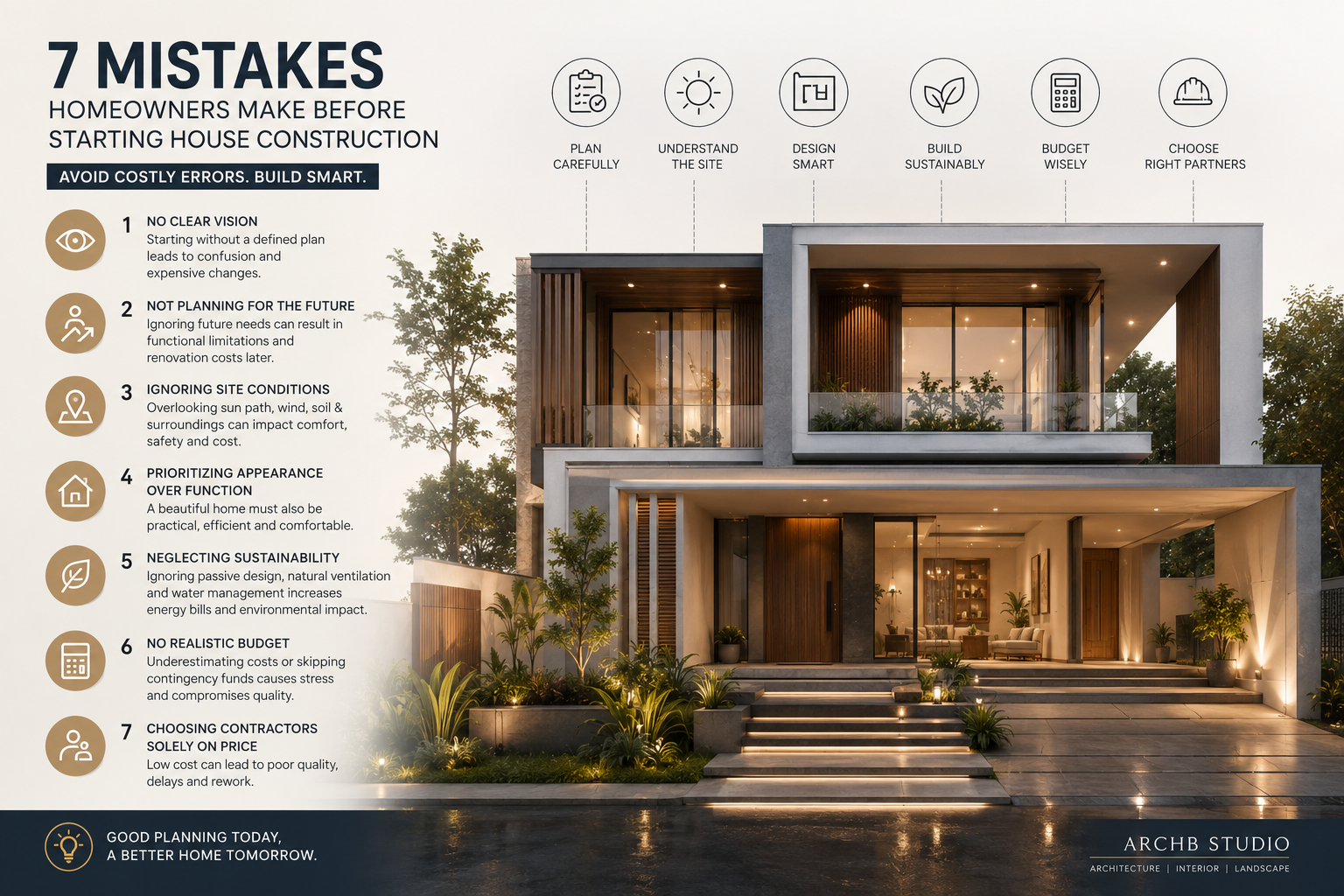
Building a home is one of the most significant investments a family makes. Yet many homeowners begin construction without adequate planning, leading to budget overruns, delays, and design compromises.
1. Starting Without a Clear Design Vision
Many homeowners begin construction with only a rough idea of what they want. A well-developed design brief helps align expectations, functionality, aesthetics, and budget before construction begins.
2. Underestimating Future Needs
A home should not only serve current requirements but also adapt to future lifestyle changes. Planning for additional family members, work-from-home spaces, and aging-in-place can save costly modifications later.
3. Ignoring Site Conditions
Every plot is unique. Sun path, wind direction, soil conditions, and surrounding context significantly influence design quality and energy performance.
4. Prioritizing Appearance Over Function
A beautiful home should also be comfortable, efficient, and practical. Good architecture balances aesthetics with functionality.
5. Neglecting Sustainability
Simple strategies such as proper orientation, natural ventilation, shading devices, and water management systems can reduce operational costs while improving comfort.
6. Not Establishing a Realistic Budget
A clear budget should include design fees, approvals, construction costs, interiors, landscaping, and contingency funds.
7. Choosing Contractors Solely on Price
The lowest quotation is not always the best value. Quality, experience, and reliability often determine the success of a project.
Final Thoughts
Successful homes are not created by chance. They result from thoughtful planning, informed decisions, and collaboration between homeowners, architects, and construction professionals. Investing time in the planning stage often saves substantial time and money during construction.