Sustainable Design: 8 Essential Methods for Building Future Homes
Introduction
As climate change, rising energy costs, and rapid urbanization continue to reshape the world, sustainable design has become one of the most important principles in modern residential architecture. Homeowners are no longer looking for houses that are simply attractive. They want homes that consume less energy, reduce environmental impact, improve indoor comfort, and remain valuable for decades.
The concept of sustainable design goes beyond installing solar panels or choosing eco-friendly paint. It is a comprehensive approach that considers every stage of a home’s lifecycle, from site selection and material sourcing to construction methods, energy consumption, and long-term maintenance. By integrating environmental responsibility with innovative architecture, sustainable homes provide healthier living spaces while reducing operating costs.
Future homes will increasingly rely on passive design strategies, renewable energy systems, intelligent automation, and environmentally friendly materials. These innovations not only help protect natural resources but also improve quality of life for homeowners by creating comfortable, resilient, and adaptable living environments.
Whether you’re planning your dream home or simply exploring the future of residential architecture, understanding sustainable design is the first step toward building a smarter and greener future.
Table of Contents
Designing with Climate in Mind
Every successful sustainable design project begins with understanding the local climate. Rather than relying heavily on air conditioners or heating systems, architects carefully study sunlight, prevailing winds, rainfall, humidity, and seasonal temperature changes before creating a building design.
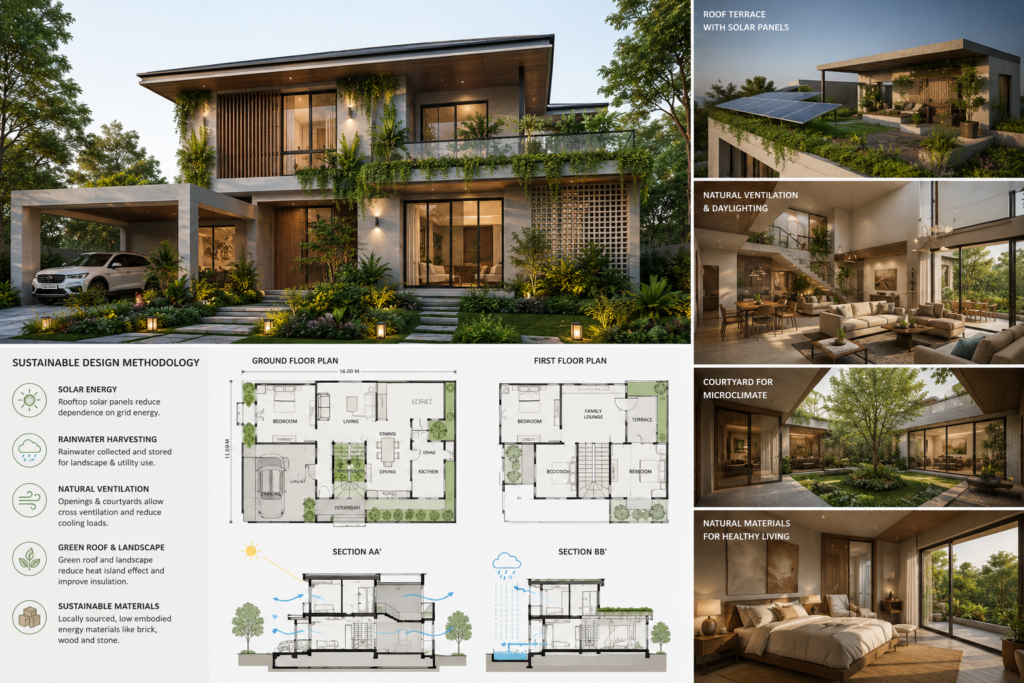
Proper building orientation can significantly reduce cooling loads by minimizing direct heat gain during summer while maximizing sunlight during winter. Carefully positioned windows improve natural lighting, reducing electricity consumption throughout the day. Cross ventilation allows cool air to circulate naturally, improving indoor comfort without excessive mechanical cooling.
Important climate-responsive strategies include:
- Optimized building orientation
- Cross ventilation
- Solar shading devices
- Thermal mass walls
- Energy-efficient glazing
- Climate-responsive landscaping
Homes designed around these principles consume less energy while offering superior comfort throughout the year. By working with nature instead of against it, sustainable design creates homes that are both environmentally responsible and economically efficient.
Passive Design Principles
Passive architecture is one of the most effective components of sustainable design because it reduces energy demand before renewable technologies are even considered.
Instead of depending entirely on mechanical heating and cooling systems, passive homes use intelligent architectural planning to regulate indoor temperatures naturally. Proper insulation, airtight construction, natural ventilation, and carefully designed openings create comfortable living environments throughout the year.
Common passive design features include:
- Deep roof overhangs
- Double or triple-glazed windows
- High-performance insulation
- Courtyards
- Skylights
- Natural ventilation systems
These architectural elements dramatically reduce electricity consumption while creating healthier indoor environments. Over the lifespan of a building, passive sustainable design can save homeowners thousands of dollars in energy costs.
Sustainable Material Selection
Choosing the right materials is another essential component of sustainable design. Traditional construction materials often require significant energy during manufacturing and transportation while generating large amounts of carbon emissions.
Modern architects increasingly prefer materials that are renewable, recyclable, durable, and locally available. Sustainable materials not only reduce environmental impact but also improve the long-term performance of buildings.
Popular options include:
- Engineered timber
- Bamboo
- Fly ash concrete
- Recycled steel
- Reclaimed wood
- Natural stone
- Cork
- Recycled composite materials
These materials require fewer natural resources while maintaining excellent structural performance and aesthetic appeal.
Material selection also affects indoor air quality. Low-VOC paints, adhesives, and finishes create healthier environments by reducing harmful emissions inside homes.
By combining durability, environmental responsibility, and modern aesthetics, sustainable design helps homeowners invest in buildings that remain efficient and beautiful for generations.
Net-Zero Energy Homes
One of the most exciting developments in sustainable design is the rise of net-zero energy homes. These buildings produce as much energy annually as they consume, significantly reducing dependence on conventional electricity sources.
Modern net-zero homes combine multiple technologies, including:
- Rooftop solar panels
- Battery storage systems
- Energy-efficient appliances
- Smart lighting controls
- High-performance insulation
- Advanced HVAC systems
Together, these systems dramatically reduce energy bills while lowering carbon emissions.
As renewable technologies become more affordable, net-zero construction is becoming increasingly accessible for homeowners around the world. Many governments also provide incentives for adopting renewable energy systems, making sustainable design an economically attractive investment.
The future of residential architecture lies in creating homes that generate clean energy while maintaining exceptional comfort and functionality.
Water Conservation Strategies
Water conservation is becoming an increasingly important aspect of sustainable design, particularly in regions experiencing water scarcity and changing climate conditions. Traditional residential construction often overlooks efficient water management, leading to unnecessary waste and higher utility costs.
Modern sustainable design incorporates innovative systems that reduce freshwater consumption while maintaining everyday convenience. These solutions not only help preserve valuable natural resources but also lower long-term operating expenses for homeowners.
Effective water-saving strategies include:
- Rainwater harvesting systems for landscape irrigation and non-potable household uses.
- Greywater recycling systems that reuse water from sinks, showers, and washing machines.
- Low-flow faucets, showerheads, and dual-flush toilets to minimize daily water consumption.
- Smart irrigation systems that adjust watering schedules based on weather conditions.
- Native and drought-resistant landscaping that requires significantly less irrigation.
When combined, these strategies can reduce household water consumption by a substantial margin without sacrificing comfort or functionality.
Water-efficient homes also place less strain on municipal infrastructure and contribute to more resilient communities. As climate change continues to impact water availability, incorporating conservation strategies into sustainable design is becoming an essential part of building future-ready homes.
Smart Home Integration
Technology is rapidly transforming the way homes are designed and operated, making sustainable design more intelligent and efficient than ever before. Smart home systems allow homeowners to monitor and optimize energy, water, lighting, and security from anywhere using smartphones or voice-controlled devices.
Unlike traditional homes, smart homes continuously collect data and adjust building systems to reduce unnecessary resource consumption. Lights automatically switch off when rooms are unoccupied, thermostats learn occupancy patterns, and irrigation systems respond to real-time weather forecasts.
Common smart technologies include:
- Smart thermostats
- Automated lighting controls
- Occupancy sensors
- Solar energy monitoring systems
- Smart water meters
- Home energy management systems
- Intelligent security systems
These technologies not only improve convenience but also reduce electricity and water consumption without compromising comfort. For example, a smart thermostat can lower cooling costs by automatically adjusting indoor temperatures based on occupancy, while smart blinds regulate daylight to reduce dependence on artificial lighting.
As artificial intelligence and the Internet of Things (IoT) continue to evolve, sustainable design will become increasingly automated, helping homeowners achieve greater efficiency with minimal effort.
Biophilic Design and Human Wellbeing
One of the most exciting trends in sustainable design is biophilic design, which strengthens the relationship between people and nature. Rather than treating buildings as isolated structures, architects integrate natural elements that improve physical health, mental well-being, and overall quality of life.
Modern lifestyles often keep people indoors for extended periods, making it essential to create living environments that promote relaxation, productivity, and emotional well-being.
Common biophilic design features include:
- Indoor gardens
- Green walls
- Courtyards
- Large windows
- Skylights
- Natural ventilation
- Water features
- Natural timber and stone finishes
Homes designed around these principles receive abundant natural daylight while maintaining strong visual connections with outdoor landscapes. Research has consistently shown that exposure to natural environments can reduce stress, improve concentration, enhance mood, and even support faster recovery from illness.
Incorporating nature into architecture is no longer considered a luxury. It has become a defining characteristic of sustainable design, creating healthier and more enjoyable living spaces for modern families.
Flexible and Adaptable Spaces
The needs of homeowners rarely remain the same throughout their lives. Families grow, careers evolve, remote work becomes permanent, and accessibility requirements change with age. This is why flexibility has become a fundamental principle of sustainable design.
Rather than constructing rigid layouts that require expensive renovations, architects now create adaptable homes capable of evolving alongside their occupants.
Examples include:
- Multi-purpose rooms
- Expandable living areas
- Sliding partitions
- Modular furniture
- Home office spaces
- Universal accessibility features
- Convertible guest rooms
Flexible spaces extend the useful life of a home by reducing the need for major structural modifications in the future. This not only saves homeowners money but also minimizes construction waste and environmental impact.
Future-ready homes are designed to adapt to changing lifestyles instead of forcing families to relocate or undertake costly remodeling projects. Through thoughtful planning, sustainable design creates residences that remain functional, comfortable, and valuable for decades.
Circular Design Thinking
Traditional construction follows a linear model where materials are extracted, used, and eventually discarded. Sustainable design embraces a circular economy that keeps materials in use for as long as possible through reuse, recycling, refurbishment, and responsible sourcing.
Circular design encourages architects to consider the entire lifecycle of a building, from construction to eventual renovation or deconstruction. Materials are selected not only for durability but also for their ability to be recovered and reused.
Key principles include:
- Designing for disassembly
- Recycled construction materials
- Modular building components
- Waste reduction during construction
- Material recovery and reuse
- Long-lasting, low-maintenance finishes
This approach significantly reduces landfill waste while lowering the environmental footprint of residential construction.
As governments and construction industries move toward stricter sustainability standards, circular design is expected to become one of the defining pillars of sustainable design worldwide.
The Future of Sustainable Living
The future of residential architecture will be shaped by the seamless integration of technology, environmental responsibility, and human-centered design. Tomorrow’s homes will not simply consume fewer resources; they will actively contribute to healthier communities and more resilient cities.
Emerging innovations include:
- AI-powered energy optimization
- Net-positive energy homes
- Advanced solar technologies
- Carbon-neutral construction materials
- Intelligent building automation
- Climate-resilient architecture
- Smart microgrids
- Digital building twins
These innovations will enable homes to generate renewable energy, monitor environmental performance, and continuously improve efficiency throughout their lifespan.
As urban populations continue to grow and environmental challenges become more complex, sustainable design will play a critical role in shaping communities that are healthier, smarter, and more resilient.
Future homes will combine architectural innovation with environmental stewardship, creating living environments that support both people and the planet.
Conclusion
The future of residential architecture depends on embracing sustainable design as the foundation of every project. By integrating climate-responsive planning, passive design principles, renewable energy systems, smart home technologies, water conservation strategies, and environmentally responsible materials, architects can create homes that are efficient, resilient, and prepared for future generations.
Beyond reducing environmental impact, sustainable design delivers tangible benefits for homeowners, including lower utility costs, improved indoor comfort, healthier living environments, and increased property value. It demonstrates that sustainability and modern luxury are not opposing ideas but complementary goals that create better homes for everyone.
At ArchB Studio, we believe every project is an opportunity to build a better future. Our approach to sustainable design combines innovation, functionality, and timeless architectural principles to create homes that are beautiful, intelligent, and environmentally responsible. By designing with people, technology, and nature in harmony, we help homeowners create living spaces that stand the test of time while contributing to a greener and more sustainable world.
Frequently Asked Questions (FAQs)
What is sustainable design in architecture?
Sustainable design is an architectural approach that minimizes environmental impact by improving energy efficiency, conserving resources, using eco-friendly materials, and creating healthier living environments.
Why is sustainable design important for future homes?
It reduces energy consumption, lowers utility bills, improves indoor comfort, decreases carbon emissions, and increases the long-term value and resilience of residential properties.
What materials are commonly used in sustainable design?
Popular materials include engineered timber, bamboo, recycled steel, reclaimed wood, cork, fly ash concrete, recycled composites, and low-VOC finishes.
Can sustainable homes reduce construction costs?
While some sustainable technologies require higher upfront investment, they often reduce long-term operating and maintenance costs through lower energy and water consumption.
Is sustainable design suitable for all climates?
Yes. Sustainable design is based on climate-responsive principles, allowing architects to tailor solutions such as insulation, shading, ventilation, and renewable energy systems to local environmental conditions.