Sustainable Materials for Your Home: 10 Proven Ways to Build Greener
Introduction
Table of Contents
The materials we choose have a significant impact on the environment. We prioritize sustainable and reclaimed materials in our designs to create beautiful spaces that are also eco-friendly.
As homeowners become increasingly conscious of environmental impact and long-term value, sustainable design has evolved from a niche concept into a fundamental aspect of modern architecture. One of the most effective ways to create an environmentally responsible home is through thoughtful material selection.
Sustainable materials not only reduce a building’s ecological footprint but also contribute to healthier living environments, lower maintenance costs, and improved energy efficiency. Choosing the right materials today can create a home that remains functional, beautiful, and efficient for decades to come.
Why Sustainable Materials Matter
The construction industry is one of the largest consumers of natural resources worldwide. Traditional building materials often require significant energy for production, transportation, and installation. Sustainable materials help reduce resource consumption while minimizing waste and carbon emissions.
Beyond environmental benefits, these materials often offer superior durability, better indoor air quality, and improved thermal performance, making them a practical investment for homeowners.
Sustainable Materials Worth Considering
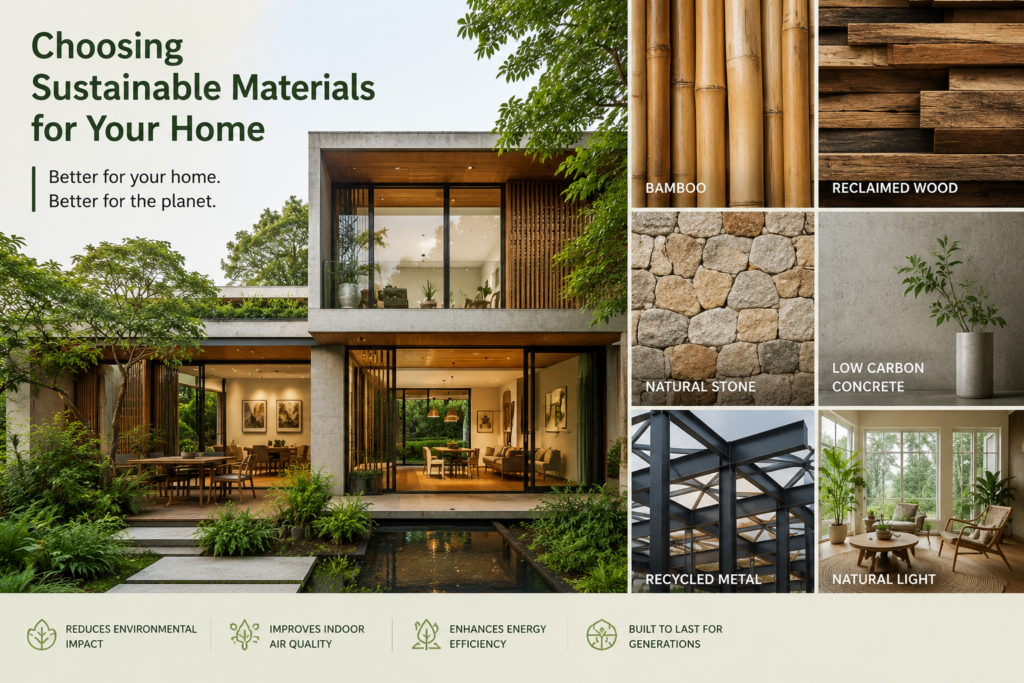
1. Bamboo
Bamboo is one of the fastest-growing renewable resources available. Its exceptional strength, versatility, and natural aesthetic make it suitable for flooring, wall finishes, furniture, and decorative applications.
Benefits include:
- Rapid renewability
- High durability
- Natural appearance
- Low environmental impact
2. Reclaimed Wood
Reclaimed timber gives existing materials a second life while adding warmth and character to interior spaces. It can be used for flooring, furniture, wall cladding, and ceiling treatments.
Benefits include:
- Reduced demand for new timber
- Unique visual appeal
- Lower environmental impact
- Preservation of natural resources
3. Natural Stone
Locally sourced stone remains one of the most durable and sustainable construction materials. Its longevity and minimal maintenance requirements make it an excellent choice for both interiors and exteriors.
Benefits include:
- Exceptional lifespan
- Thermal mass properties
- Timeless appearance
- Low maintenance requirements
4. Fly Ash and Sustainable Concrete Alternatives
Innovations in concrete technology have led to the development of materials that partially replace cement with industrial by-products such as fly ash. These alternatives significantly reduce carbon emissions associated with construction.
Benefits include:
- Reduced embodied carbon
- Improved durability
- Lower environmental impact
- Enhanced performance
5. Recycled Metal
Steel and aluminum are highly recyclable materials that can be reused repeatedly without compromising quality. Recycled metal is increasingly used in structural elements, roofing systems, and architectural features.
Benefits include:
- High recyclability
- Structural strength
- Long lifespan
- Reduced resource extraction
Prioritizing Indoor Air Quality
Sustainability extends beyond environmental responsibility. The materials used within a home directly influence occupant health and comfort.
Consider selecting:
- Low-VOC paints and finishes
- Formaldehyde-free wood products
- Natural insulation materials
- Eco-friendly adhesives and sealants
These choices help create healthier indoor environments while reducing exposure to harmful chemicals.
The Role of Local Materials
Sourcing materials locally is often overlooked but can significantly improve sustainability. Locally available materials reduce transportation emissions and support regional economies while ensuring compatibility with local climate conditions.
Stone, brick, timber, and handcrafted materials sourced from nearby regions often provide both environmental and cultural value to a project.
Balancing Sustainability and Design
A common misconception is that sustainable homes require compromising on aesthetics. Modern sustainable materials offer a wide range of finishes, textures, and design possibilities. From contemporary minimalist homes to luxurious villas and farmhouses, environmentally responsible materials can enhance both beauty and performance.
The key lies in selecting materials that align with the project’s design vision, climate conditions, and long-term maintenance goals.
Building a Home That Lasts
True sustainability is not simply about choosing environmentally friendly products. It is about designing spaces that endure. Durable materials that age gracefully, require minimal maintenance, and remain relevant over time ultimately reduce waste and resource consumption.
A well-designed home should serve generations while adapting to changing needs and lifestyles.
Conclusion
Sustainable material selection is one of the most impactful decisions in any residential project. By prioritizing renewable, durable, locally sourced, and environmentally responsible materials, homeowners can create spaces that are healthier, more efficient, and better prepared for the future.
At ArchB Studio, we believe thoughtful material choices are fundamental to creating architecture that balances aesthetics, functionality, and environmental responsibility. Every project presents an opportunity to build not just for today, but for generations to come.