AI in Architecture: 7 Powerful Benefits Every Architect Should Know
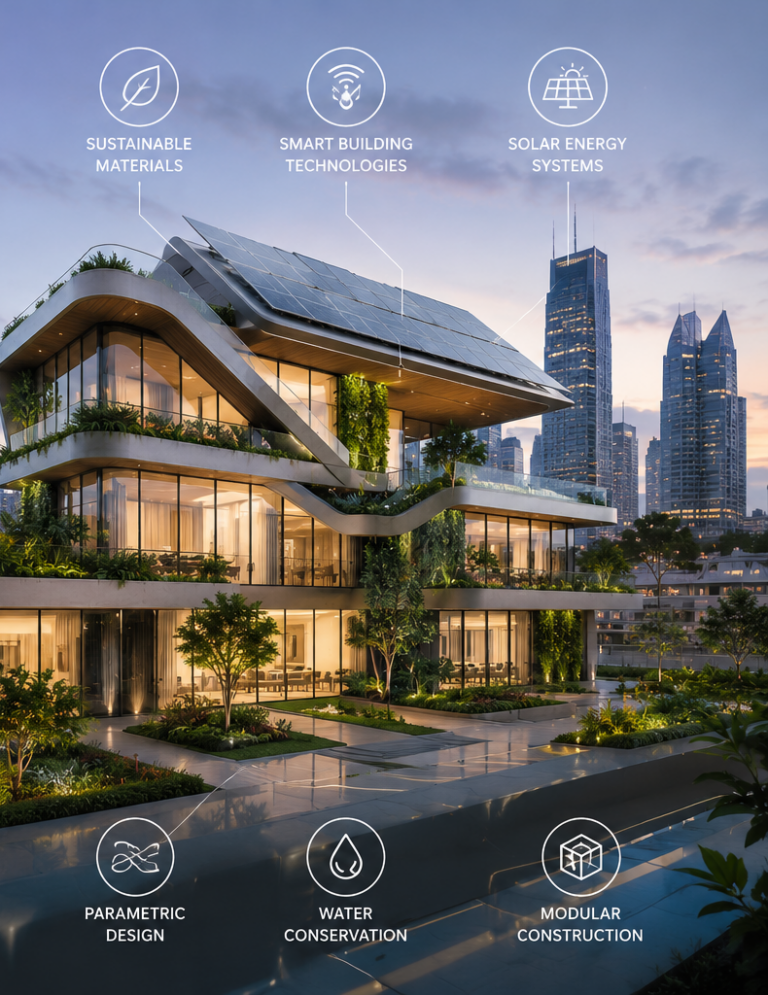
Artificial Intelligence is transforming the way we design buildings. From generative design to predictive modeling, AI allows architects to explore more possibilities and optimize structures for efficiency and beauty.
Introduction
Table of Contents
AI in architecture is transforming industries worldwide, and architecture is no exception. What once required weeks of manual calculations, extensive drafting, and countless design revisions can now be accomplished more efficiently through AI-powered tools. From conceptual design and sustainability analysis to project management and smart building integration, AI is reshaping the way architects envision, design, and construct the built environment.
As urban populations grow and sustainability becomes a global priority, AI is emerging as a critical technology that helps architects create innovative, efficient, and future-ready spaces.
AI-Powered Design and Creativity
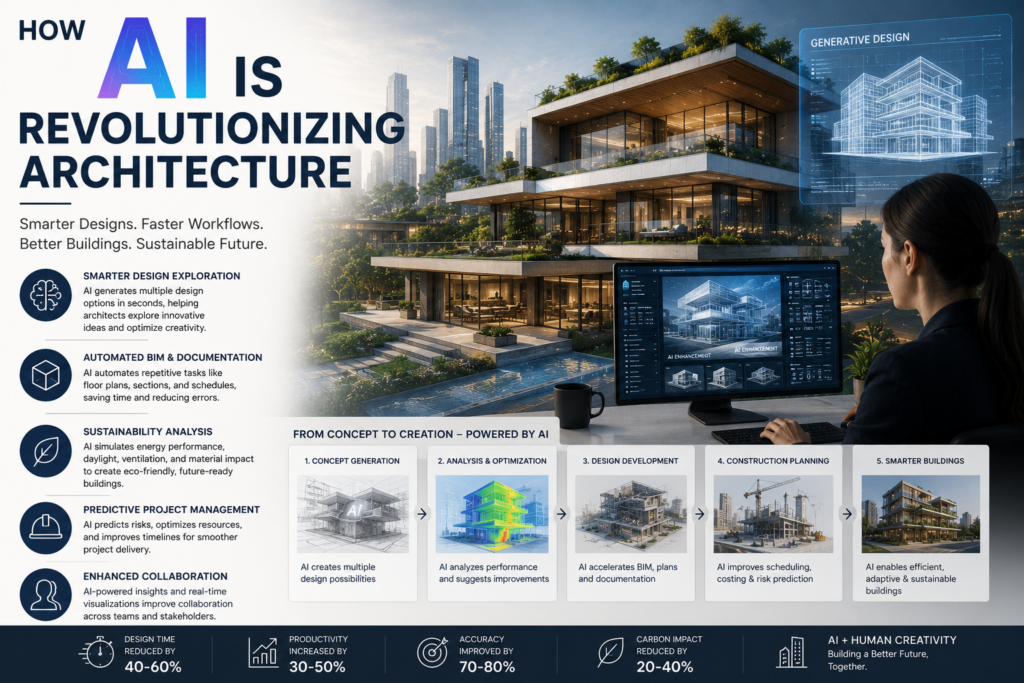
One of the most transformative applications of AI in architecture is its ability to enhance creativity and streamline the design process. Traditionally, architects spent countless hours developing multiple design concepts, refining layouts, and evaluating building performance. Today, Artificial Intelligence enables professionals to generate, analyze, and optimize thousands of design alternatives within minutes.
Using generative design algorithms, AI in architecture can evaluate site conditions, zoning regulations, climate data, building orientation, budget constraints, and client preferences simultaneously. Instead of producing a single concept, AI generates multiple optimized solutions, allowing architects to compare performance, aesthetics, and cost before selecting the most suitable design.
Key benefits include:
- Faster concept development
- Optimized space planning
- Improved structural efficiency
- Better daylight utilization
- Reduced material waste
- Data-driven design decisions
Rather than replacing architects, AI in architecture serves as an intelligent design partner that enhances creativity, accelerates innovation, and allows professionals to focus on solving complex architectural challenges.
Improving Building Performance
Creating high-performing buildings has become a fundamental objective of modern architecture. AI in architecture enables architects to predict how a building will perform long before construction begins, helping them make informed design decisions that improve efficiency, sustainability, and occupant comfort.
Advanced AI algorithms analyze multiple performance factors simultaneously, including:
- Energy consumption
- Natural daylight availability
- Indoor air quality
- Ventilation efficiency
- Thermal comfort
- Structural integrity
- Acoustic performance
These predictive simulations allow architects to optimize building orientation, façade design, insulation, and material selection during the early design stages. By identifying potential issues before construction, AI in architecture minimizes costly revisions while improving overall building quality.
This proactive approach results in homes and commercial buildings that consume less energy, provide healthier indoor environments, and deliver long-term operational savings.
Accelerating Project Delivery
Traditional architectural workflows often involve repetitive and time-consuming tasks such as drafting, documentation, scheduling, coordination, and quality checking. One of the greatest advantages of AI in architecture is its ability to automate these routine processes, allowing architects to dedicate more time to creativity and strategic decision-making.
AI-powered software can:
- Generate construction drawings
- Detect design clashes automatically
- Organize project documentation
- Coordinate multidisciplinary teams
- Improve cost estimation
- Optimize project scheduling
Automation significantly reduces manual errors while improving collaboration among architects, engineers, contractors, and consultants.
By streamlining workflows, AI in architecture shortens project timelines, enhances productivity, and enables firms to deliver high-quality projects more efficiently without compromising design excellence.
Enhancing Sustainability
Sustainability has become one of the most important priorities in contemporary architecture. AI in architecture plays a critical role in helping architects design environmentally responsible buildings that consume fewer resources while maximizing occupant comfort.
Artificial Intelligence processes large volumes of environmental data to recommend sustainable design strategies such as:
- Optimal building orientation
- Passive solar design
- Energy-efficient materials
- Renewable energy integration
- Rainwater harvesting
- Carbon footprint reduction
- Climate-responsive design
AI can also evaluate thousands of material combinations to identify solutions with the lowest embodied carbon and highest energy efficiency.
By improving environmental performance throughout the building lifecycle, AI in architecture helps architects create greener, healthier, and more resilient buildings while supporting global sustainability goals.
Smart Cities and Urban Planning
The impact of AI in architecture extends beyond individual buildings to the planning and development of entire cities. As urban populations continue to grow, architects and planners must create infrastructure that is efficient, resilient, and capable of supporting future demands.
AI analyzes massive datasets related to:
- Traffic movement
- Population growth
- Public transportation
- Energy consumption
- Environmental conditions
- Infrastructure capacity
- Land-use patterns
These insights enable architects and urban planners to make informed decisions that improve mobility, reduce congestion, optimize public services, and create more sustainable communities.
By supporting data-driven planning, AI in architecture is becoming a key driver in the development of intelligent, connected, and future-ready smart cities.
Predictive Maintenance and Intelligent Building Management
Modern buildings increasingly rely on smart sensors and Internet of Things (IoT) devices to monitor performance in real time. AI in architecture transforms this data into actionable insights that improve building management throughout its operational life.
AI-powered predictive maintenance systems continuously monitor:
- HVAC performance
- Electrical systems
- Water usage
- Structural health
- Occupancy patterns
- Indoor air quality
- Equipment performance
Instead of waiting for systems to fail, facility managers receive early warnings about potential issues, allowing maintenance to be performed before costly breakdowns occur.
This proactive approach reduces maintenance expenses, improves energy efficiency, extends building lifespan, and enhances occupant safety.
Virtual Reality and AI Integration
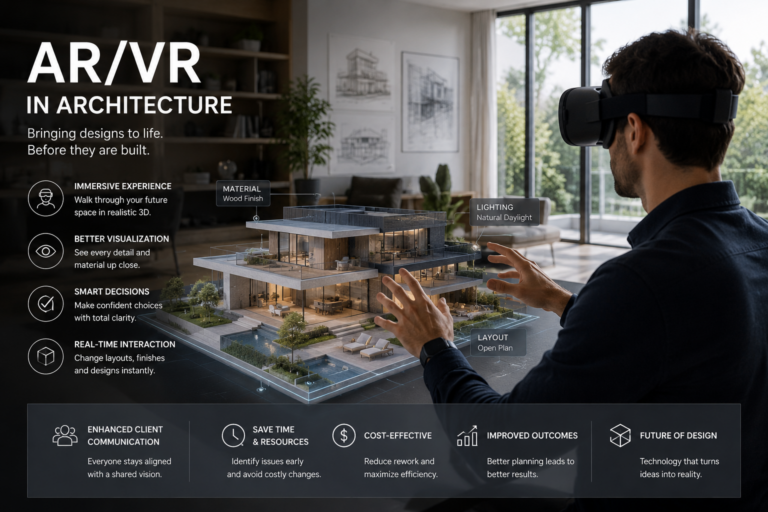
The integration of AI in architecture with Virtual Reality (VR) and Augmented Reality (AR) is transforming how architects present and refine their designs. Clients can now experience immersive virtual walkthroughs before construction begins, gaining a realistic understanding of spaces, materials, lighting, and layouts.
AI enhances these experiences by:
- Personalizing design recommendations
- Analyzing user behavior
- Suggesting layout improvements
- Optimizing furniture placement
- Simulating lighting conditions
This interactive process enables clients to make informed decisions while reducing misunderstandings and minimizing costly design revisions.
Together, AI, AR, and VR are redefining architectural visualization and creating a more collaborative design process.
Challenges and Considerations
Although AI in architecture offers numerous advantages, its adoption also presents several challenges. High implementation costs, software integration, data privacy concerns, and the need for specialized skills remain significant barriers for many architectural firms.
Additional considerations include:
- Ethical use of AI-generated designs
- Data security and privacy
- Dependence on high-quality datasets
- Workforce training
- Regulatory compliance
While Artificial Intelligence can automate many technical tasks, it cannot replace human creativity, cultural understanding, or professional judgment.
The most successful architects will use AI in architecture as a collaborative tool that enhances decision-making rather than replacing the design expertise that defines exceptional architecture.
The Future of AI in Architecture
The future of AI in architecture is filled with exciting possibilities. As machine learning, robotics, digital twins, and intelligent automation continue to evolve, architects will gain access to increasingly sophisticated design and construction tools.
Future innovations may include:
- Autonomous construction robots
- Self-optimizing smart buildings
- AI-generated structural systems
- Digital twins for real-time building management
- Adaptive façades that respond to weather
- Personalized living environments powered by AI
These technologies will enable architects to design buildings that are more efficient, sustainable, and responsive to the needs of occupants.
As AI continues to mature, its role will expand from a design assistant to a strategic partner in shaping the future of the built environment.
Conclusion
AI in architecture is revolutionizing the profession by combining intelligent automation with human creativity. From generative design and predictive analytics to sustainable building performance and smart city planning, Artificial Intelligence is transforming how architects design, construct, and manage buildings.
By embracing AI in architecture, professionals can improve project efficiency, reduce costs, enhance sustainability, and deliver innovative solutions that address the challenges of modern construction. However, the true strength of AI lies not in replacing architects but in empowering them to make better, faster, and more informed design decisions.
At ArchB Studio, we believe the future of architecture lies in the collaboration between visionary designers and intelligent technologies. By integrating AI in architecture with sustainable design principles and innovative thinking, we create buildings that are smarter, more efficient, and built to meet the needs of future generations.