Future of Architecture: 8 Essentials Every Architect Should Know
Introduction
Table of Contents
The future of Architecture has always evolved alongside human aspirations, technological advancements, and environmental challenges. Today, the profession stands at a transformative crossroads where innovation is redefining how buildings are designed, constructed, and experienced. From artificial intelligence to sustainable materials, the future of architecture is no longer a distant vision but an emerging reality.
Designing for a Smarter Future
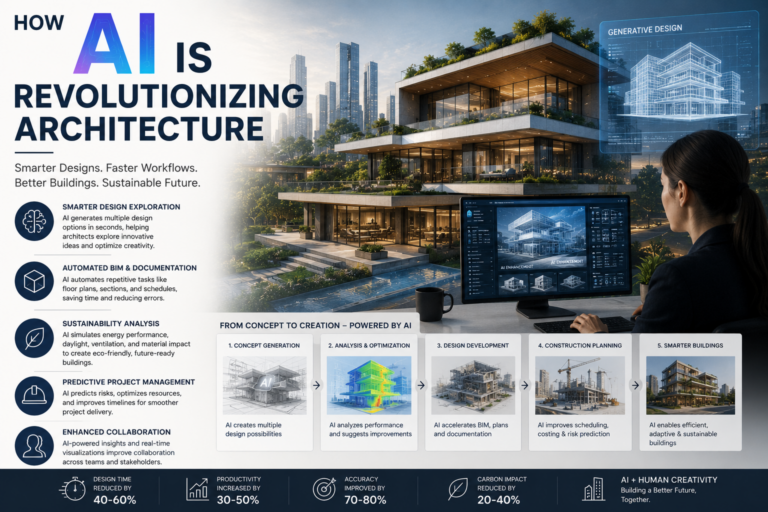
Data and technology increasingly drive modern architecture. Advanced digital tools enable architects to analyze climate conditions, optimize building performance, and create spaces that respond intelligently to their surroundings.
Artificial Intelligence (AI) and generative design software can evaluate thousands of design possibilities in a fraction of the time, helping architects discover solutions that balance aesthetics, functionality, and efficiency. These technologies are allowing designers to focus more on creativity while improving project outcomes.
Sustainable Design as a Necessity
Sustainability is no longer an optional consideration. As cities grow and environmental concerns intensify, architects are embracing strategies that reduce energy consumption and minimize environmental impact.
Innovations in sustainable architecture include:
- Net-zero energy buildings
- Passive cooling and ventilation systems
- Green roofs and vertical gardens
- Solar-integrated building envelopes
- Rainwater harvesting systems
The future of architecture will prioritize buildings that consume fewer resources while providing healthier and more comfortable environments for occupants.
Parametric and Computational Design
Parametric design has opened new possibilities for architectural expression. Using algorithms and computational tools, architects can create complex forms that respond to structural, environmental, and functional requirements.
This approach enables:
- Optimized building performance
- Reduced material waste
- Unique architectural identities
- Greater design flexibility
What was once impossible to draw or construct can now be accurately modeled and fabricated through digital workflows.
Smart Buildings and Connected Spaces
Buildings are becoming increasingly intelligent. Integrated sensors, automation systems, and IoT technologies allow spaces to adapt to users’ needs in real time.
Smart architecture can:
- Adjust lighting automatically
- Monitor energy consumption
- Optimize indoor air quality
- Enhance security systems
- Improve occupant comfort
As technology advances, buildings will become more responsive, efficient, and personalized.
Advanced Materials Transforming Construction
Material innovation is reshaping the possibilities of modern architecture. Researchers and manufacturers are developing materials that are stronger, lighter, and more sustainable than traditional alternatives.
Emerging materials include:
- Self-healing concrete
- Transparent wood
- Carbon-absorbing building materials
- High-performance recycled composites
- Smart glass technologies
These innovations improve durability while reducing the environmental footprint of construction.
Modular and Prefabricated Construction
The future of construction lies in precision, speed, and efficiency. Modular and prefabricated building methods are revolutionizing project delivery by manufacturing components in controlled environments before assembly on site.
Benefits include:
- Reduced construction time
- Improved quality control
- Lower material waste
- Enhanced cost efficiency
As demand for housing and infrastructure grows, modular solutions will play an increasingly important role.
Human-Centered Design
While technology continues to evolve, the fundamental purpose of architecture remains unchanged: creating meaningful spaces for people. Future architecture will place greater emphasis on wellbeing, accessibility, and user experience.
Designers are increasingly considering factors such as:
- Natural light
- Biophilic design
- Mental wellness
- Community interaction
- Flexible living and working environments
Successful architecture will combine technological innovation with a deep understanding of human needs.
The Role of Architects in the Future
The architect of tomorrow will be more than a designer. They will act as a strategist, sustainability advocate, technology integrator, and problem solver. As cities become more complex and environmental challenges more urgent, architects will play a critical role in shaping resilient and future-ready communities.
Conclusion
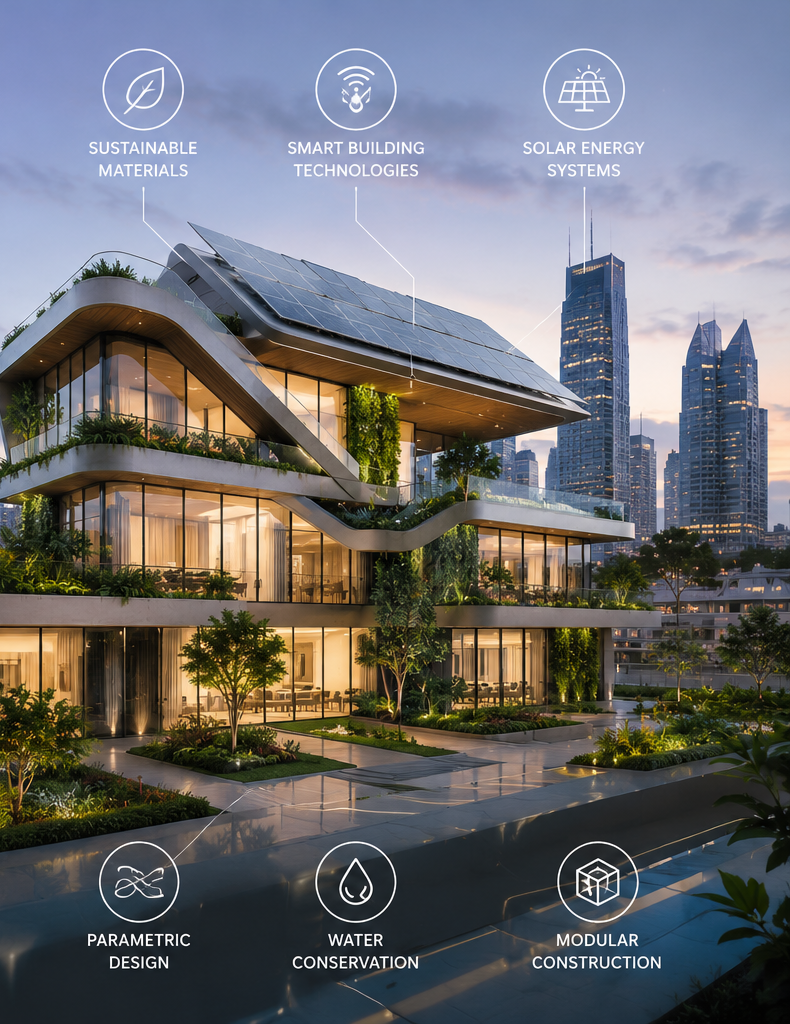
The future of architecture is being shaped by innovation at every level. From AI-driven design and smart buildings to sustainable materials and modular construction, emerging technologies are transforming how we imagine and create the built environment.
At ArchB Studio, we believe innovation should serve a greater purpose: creating spaces that are sustainable, efficient, beautiful, and deeply connected to the people who use them. The future of architecture is not just about building smarter structures. It is about designing better experiences and creating a more sustainable world.